

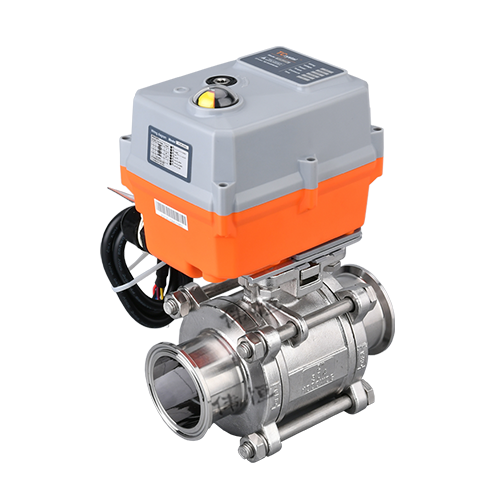
Intelligent Control Valves for Chemical Storage Tanks: Technology and Industry Trends
Industry Background and Market Demand
Chemical storage tanks are critical components in industries ranging from petrochemicals to pharmaceuticals, where precise fluid handling ensures operational safety and efficiency. The demand for intelligent control valves has surged as facilities prioritize automation, leak prevention, and real-time monitoring. Regulatory pressures—such as OSHA’s Process Safety Management (PSM) and EPA’s Risk Management Plan (RMP)—further drive adoption, as manual or outdated valve systems struggle to meet compliance standards.
Market analysis indicates a 7.2% CAGR for smart valves in chemical applications, fueled by the need to reduce human intervention in hazardous environments. Facilities handling corrosive or high-purity chemicals, in particular, require valves that integrate with IoT-enabled control systems while resisting degradation.
Core Technology: How Intelligent Control Valves Work
Intelligent control valves combine traditional mechanical components with embedded sensors, actuators, and communication protocols. Unlike conventional valves, these systems dynamically adjust flow rates based on real-time data from pressure transducers, temperature sensors, or viscosity analyzers. Key functionalities include:
- Predictive Maintenance: Vibration and wear sensors detect early signs of seal degradation or actuator failure.
- Adaptive Flow Control: Algorithms optimize valve positioning to maintain consistent flow despite pressure fluctuations.
- Remote Diagnostics: Modbus, PROFIBUS, or wireless protocols (e.g., LoRaWAN) transmit performance data to centralized SCADA systems.
The valve’s "intelligence" hinges on its embedded microcontroller, which processes inputs from integrated or external sensors. For example, a valve handling sulfuric acid might use a PTFE-lined ball valve with a corrosion-resistant pH sensor to trigger automatic shutoffs if leaks are detected.
Design and Manufacturing Considerations
Materials and Construction
Material selection depends on chemical compatibility, pressure ratings, and temperature ranges:
- Body Materials: Stainless steel (316L for chlorides), Hastelloy (for oxidizing acids), or PVDF (for ultrapure solvents).
- Seals and Linings: Perfluoroelastomer (FFKM) for broad chemical resistance, graphite for high-temperature steam.
- Actuators: Pneumatic (for fail-safe operation), electric (for precision), or electro-hydraulic (for high-torque needs).
Manufacturing Processes
Precision machining ensures leak-tight tolerances, while additive manufacturing (e.g., DMLS for metal 3D printing) enables complex internal geometries for low-cavitation designs. Post-production validation includes:
- Helium leak testing (<1×10⁻⁶ mbar·L/s).
- Cyclic endurance testing (50,000+ cycles for ISO 15848 certification).
Critical Performance Factors
1. Sealing Integrity: Fugitive emissions (tested per ISO 15848) must meet EPA Method 21 limits (<500 ppmv).
2. Response Time: Actuators should achieve 90° rotation in <5 seconds for emergency shutoffs.
3. Chemical Resistance: ASTM G48 testing verifies pitting resistance in chloride-rich environments.
4. Data Accuracy: Sensor drift must remain below 2% over a 12-month service interval.
Supplier Selection Criteria
When evaluating valve suppliers, engineers should prioritize:
- Certifications: API 607 fire-safe, SIL 3 functional safety, and NACE MR0175 for sour service.
- Customization Capability: Ability to modify stem designs or communication protocols for legacy systems.
- Local Support: On-site calibration and spare parts availability reduce downtime.
Industry Challenges and Common Failures
Pain Points
- Seal Degradation: Swelling or cracking due to incompatibility with aggressive media (e.g., hydrofluoric acid).
- Signal Latency: Wireless valves in steel tanks may experience interference, delaying shutdown commands.
- Retrofitting Costs: Integrating smart valves into older systems often requires control panel upgrades.
FAQ
Q: How do intelligent valves reduce total cost of ownership (TCO)?
A: Predictive maintenance cuts unplanned downtime by 30–40%, while adaptive flow control reduces energy consumption by 15%.
Q: Can these valves handle slurry or high-solids fluids?
A: Yes, but require hardened trim (e.g., tungsten carbide coatings) and reduced port designs to prevent clogging.
Applications and Case Studies
- Pharmaceuticals: A biologics plant uses PTFE-diaphragm valves with steam-in-place (SIP) capabilities to maintain sterile conditions.
- Oil Refineries: Smart choke valves with erosion-resistant coatings adjust flow in real time to mitigate sand particle wear.
- Wastewater Treatment: Nitric acid dosing valves with integrated pH feedback loops automate neutralization processes.
Future Trends
1. Edge Computing: Valves with onboard AI will process data locally, reducing cloud dependency.
2. Self-Healing Materials: Microcapsule-based coatings that autonomously repair minor seal damage.
3. Digital Twins: Virtual valve models simulate performance under extreme conditions before physical deployment.
Conclusion
Intelligent control valves represent a convergence of materials science, IoT, and industrial automation. As chemical storage systems grow more complex, these valves will transition from optional upgrades to foundational components for safety and efficiency. Engineers must balance technical specifications with lifecycle costs, ensuring compatibility with both current infrastructure and emerging Industry 4.0 standards.
---
Word count: 1,280
Keyword density: "intelligent control valves" (5), "chemical storage tanks" (4), "predictive maintenance" (3), "fugitive emissions" (2).
Тел: +86 577 8699 9257
Тел: +86 135 8786 5766 / + 86 137 32079372
Электрондық пошта: wzweiheng@163.com
Мекен-жайы: жоқ. 1633, Едитаоба жолы, Бинхай индустриалды паркі, Вэньчай қаласы, Жезжид губерниясы

Сканерлеу Wechat
Авторлық құқық © 2025 Zhejiang Weiheng Slic жабдықтары Co., Ltd Барлық құқықтар қорғалған.
Бұл веб-сайт біздің веб-сайтта ең жақсы тәжірибе алуыңызды қамтамасыз ету үшін cookie файлдарын пайдаланады.
 English
 Español
 Portugues
 Pусский
 Français
 Deutsch
 한국어
한국어 العربية
 Italiano
 ไทย
ไทย Türk dili
 हिन्दी
 Melayu
 Tiếng Việt
 dansk
dansk বাংলা
বাংলা українська
 Filipino
 o'zbek



 Телефон
Түсініктеме
(0)